
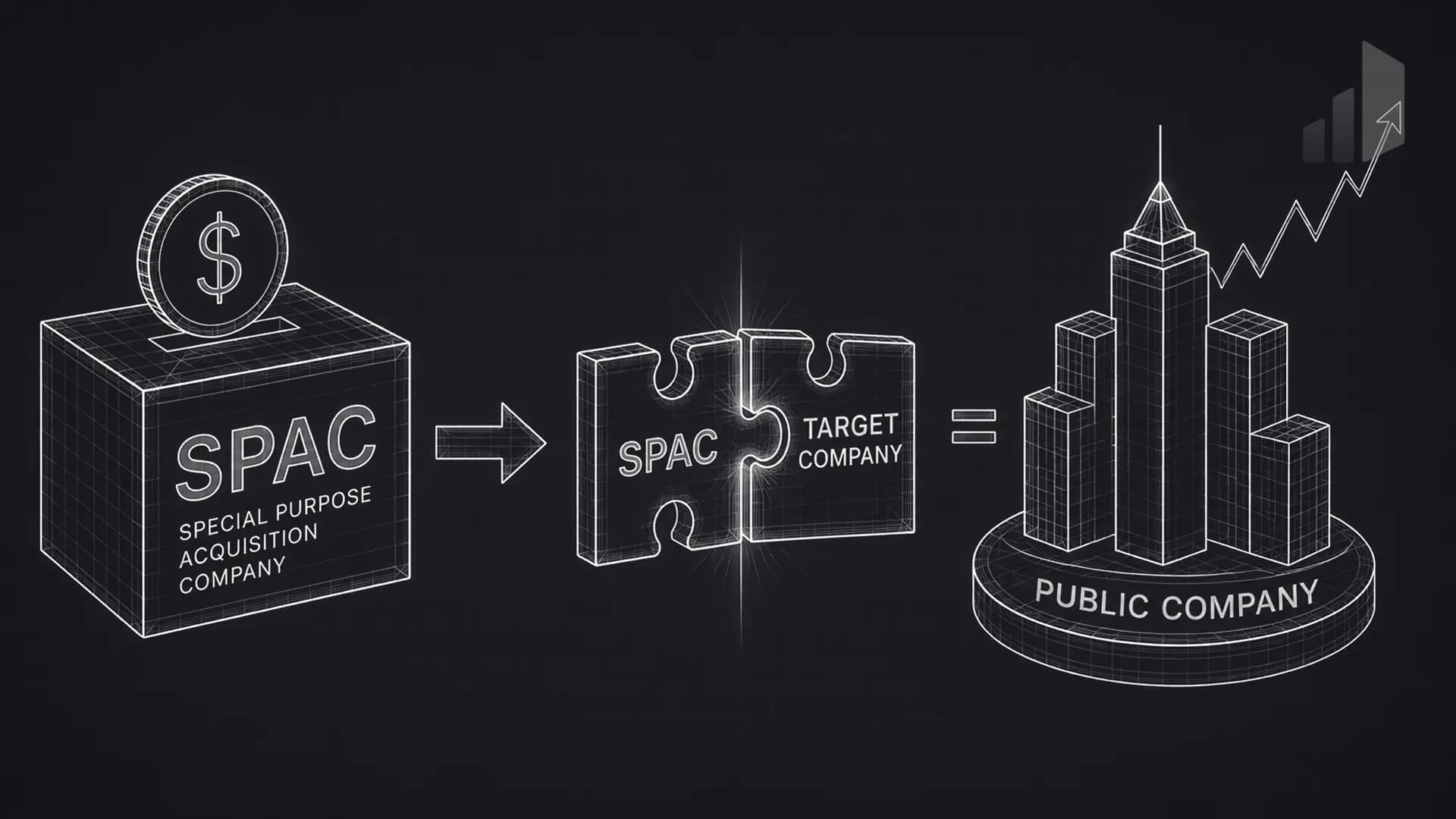
A de-SPAC (or de-SPAC transaction) is the process where a SPAC completes its merger with a target company — the moment the blank-check shell becomes a real, operating public company trading under a new name and ticker.
Where it fits
A SPAC's life has two phases: first it raises money and looks for a target, then it merges with one. That second phase — closing the deal and taking the target public — is the de-SPAC.
How a de-SPAC unfolds
- Announcement. The SPAC names its target and the agreed valuation.
- Shareholder vote. SPAC investors approve the merger and decide whether to stay invested or redeem their shares for cash.
- PIPE financing. A private investment (a PIPE) is often raised alongside to top up the cash, especially if redemptions are high.
- Close and relist. The merger completes, the combined company starts trading under a new ticker, and the SPAC ceases to exist as a shell.
What to keep in mind
Redemptions can sharply reduce the cash the target actually receives, which sometimes reshapes the deal late in the process. Newly de-SPAC'd companies often see high volatility once early backers and PIPE investors are free to sell after lockups expire. And the valuation agreed in the deal isn't always validated by the open market once shares trade freely.