
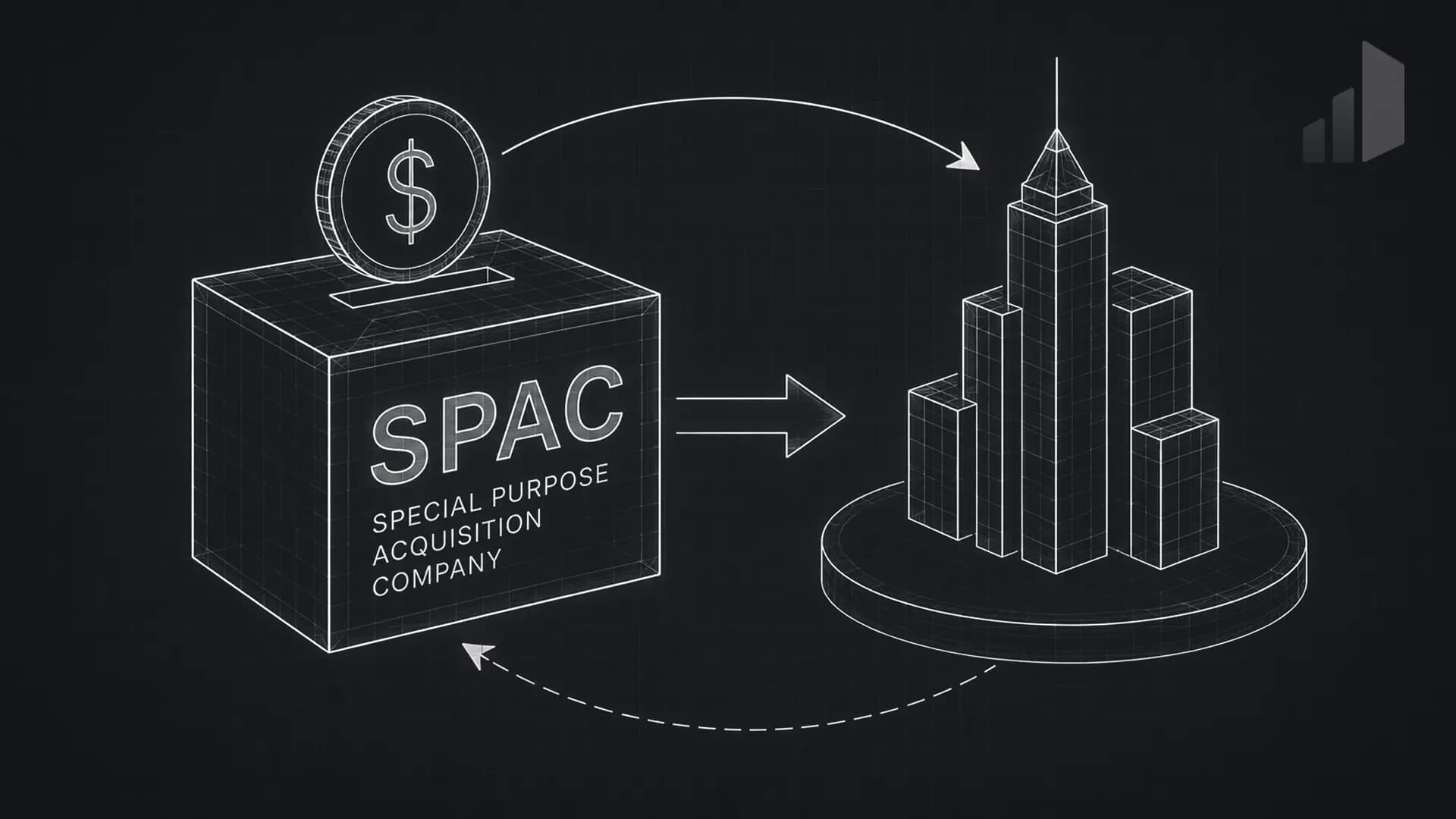
A SPAC (Special Purpose Acquisition Company) is a "blank-check" company that raises money through its own IPO with no products or operations of its own. Its only purpose is to merge with a private company later and take it public. Investors buy in before the target is even chosen.
How a SPAC works
A SPAC is created by sponsors who list it on an exchange, usually at $10 per unit, and place the cash in a trust. They then have a set window — typically 18 to 24 months — to find and merge with a private company.
- Trust account. The IPO proceeds sit in trust, earning interest, until a deal closes.
- The clock. If no merger happens before the deadline, the SPAC liquidates and returns the cash to shareholders.
- Redemption rights. Even after a target is announced, investors can vote and reclaim their share of the trust instead of staying in.
Why companies use them
For a private company, merging with a SPAC is an alternative route to going public — often faster and with more price certainty than a traditional IPO, since terms are negotiated directly with the sponsor rather than set by a roadshow.
What to keep in mind
SPAC sponsors typically keep a "promote" of around 20% of shares for a nominal price, which dilutes other investors. Warrants add further dilution, and heavy redemptions can drain the trust before a deal closes. Post-merger performance has historically been mixed, so the structure carries real risk.