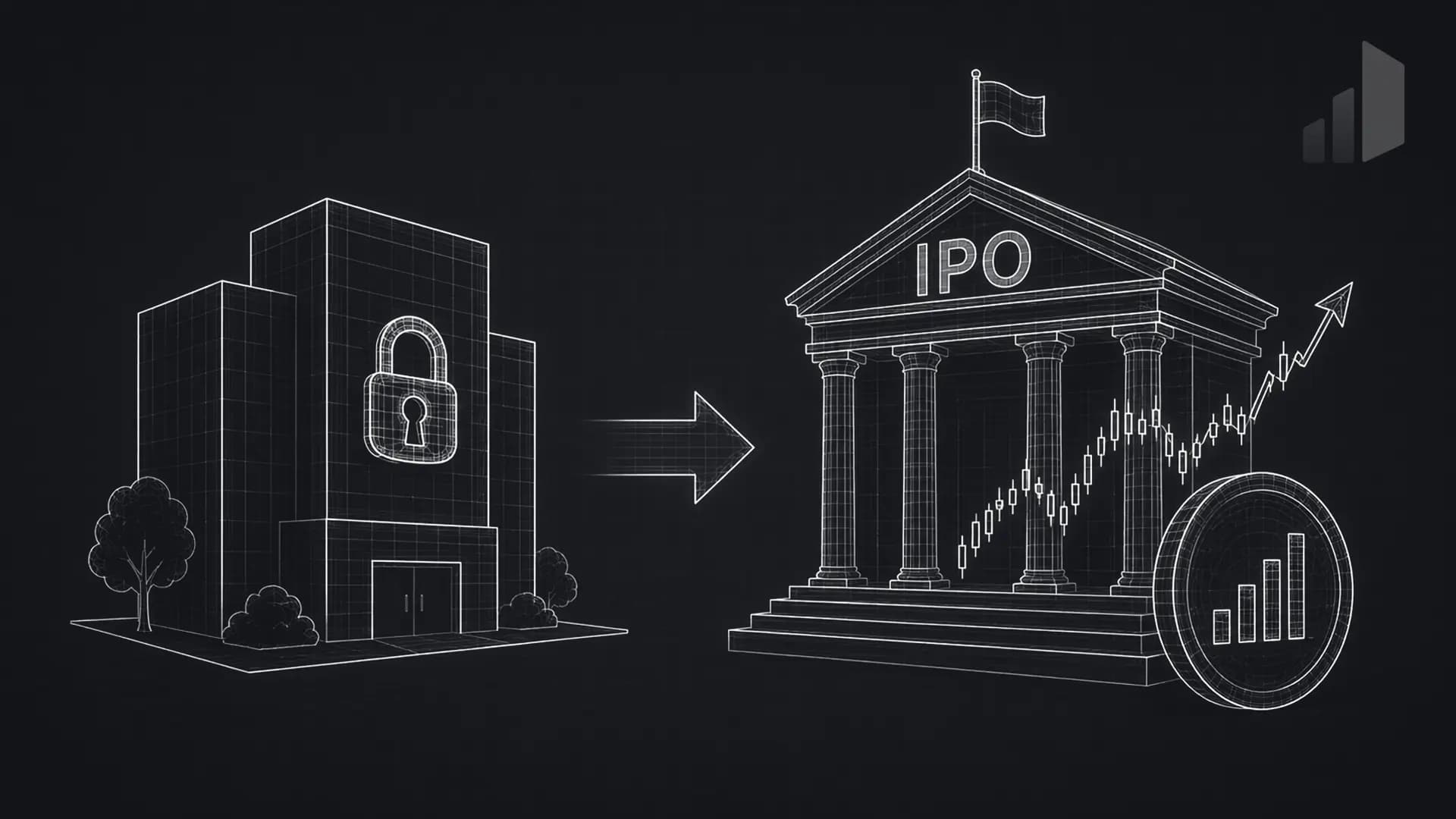
An IPO (Initial Public Offering) is the first time a private company sells its shares to the public and lists them on a stock exchange. It turns private ownership into freely tradable stock and raises capital for the company in the process.
How an IPO works
- Filing. The company files a prospectus (an S-1 in the US) disclosing its financials, business, and risks.
- Roadshow and pricing. Underwriting banks gauge demand from large investors and set a price range, then fix a final offer price the night before trading begins.
- Listing day. Shares start trading on an exchange under a new ticker, and the first-day price can move sharply away from the offer price.
Why companies go public
Going public raises money to fund growth and gives early investors and employees a way to sell their shares. In exchange, the company takes on scrutiny: public reporting, quarterly results, and constant market pressure.
Other routes to public markets
A traditional IPO isn't the only path. A company can also use a direct listing (where no new shares are sold) or merge with a SPAC. Some exposure to a company is even available before it lists, through pre-IPO markets.
What to keep in mind
Retail investors usually can't buy at the offer price — most of the allocation goes to institutions, so you often end up buying at the open, after any first-day pop. Insider lockups, typically 90 to 180 days, can also add selling pressure once they expire.